How the West Distorted Shahada into Savagery
How the West Distorted Shahada into Savagery
There is an image that has circulated hundreds of times since October 2023, in hundreds of variations, and yet it remains fundamentally illegible to the Western eye. A Palestinian mother holds her child, wrapped in a white shroud. The child is dead. The mother is weeping. And she is smiling.
That image has been shared on social media millions of times. It has been screenshot, reposted, commented on, argued over. Western audiences cycle through a predictable set of reactions. Some feel pity. Some feel horror. Some feel confusion. A few, the ones who have been sufficiently conditioned by two decades of War on Terror propaganda, feel suspicion. Why is she smiling? What kind of mother smiles when her child is dead? What kind of culture produces that response?
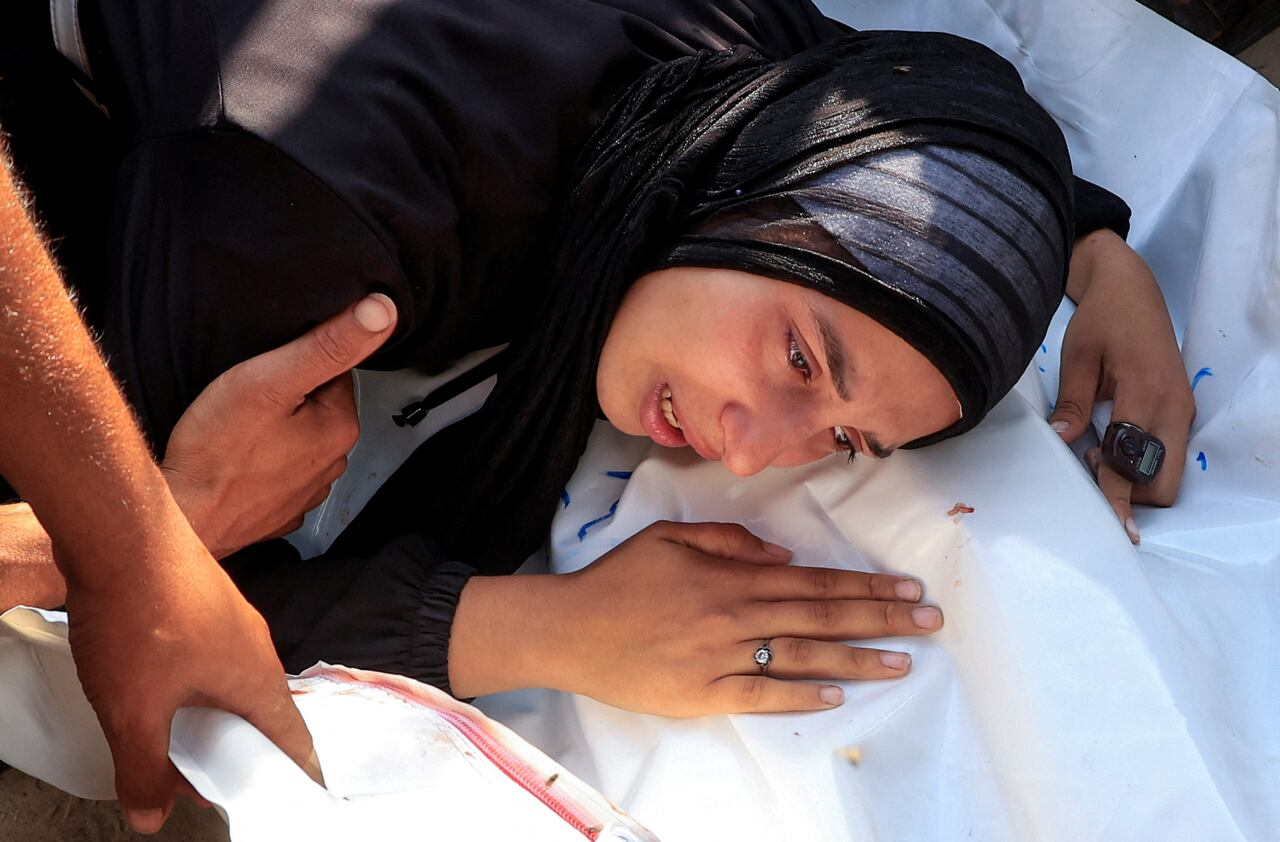
And here is the core of what I want to say in this piece, if you do not understand martyrdom, you will never understand that image. You will never understand Palestinian steadfastness. You will never understand why a people who have endured seventy-eight years of dispossession, occupation, siege, and now genocide have not broken. And the Western project of distorting, pathologizing, and ultimately extracting the concept of martyrdom from Islam and from the Palestinian struggle is not an accident of cultural misunderstanding. It is a deliberate strategy and one that is essential infrastructure in the architecture of Islamophobia. And it is fused, at every level, with the Zionist project in ways that I intend to make visible.
The Islamophobia industry and the pro-Israel lobby are not merely allied. They are structurally dependent on each other. They require each other. And the hinge on which their entire apparatus turns is Palestine. If you remove Palestine from their equation, the machinery has no purpose. The billions of dollars in annual funding, the network of think tanks, the media infrastructure, the Congressional influence operations, the campus surveillance systems, the doxxing organizations, all of it exists to accomplish one thing, to ensure that Western publics never develop the capacity to see Palestinians as fully human, and therefore never develop the moral clarity to oppose what is being done to them. The distortion of martyrdom is is the centerpiece. Because martyrdom is the concept that, more than any other, reveals the spiritual depth of Palestinian resistance, and spiritual depth is precisely what the apparatus cannot afford for Western audiences to perceive.
What Martyrdom Actually Is
Before I can talk about distortion, I need to establish what is being distorted, because the gap between what martyrdom means in the Islamic tradition and what Western media has turned it into is so vast that they might as well be different words.
In Arabic, the word for martyr is shaheed. It comes from the root sh-h-d, which means to witness, to testify, to be present. The shaheed is, at the most fundamental level, a witness. Not a suicidal fanatic or a death-cultist, but simply a witness. Someone whose life and, if Allah wills it, whose death testifies to the truth. The linguistic root tells you everything. The same root gives us shahada, the testimony of faith: there is no god but Allah, and Muhammad is His messenger. It gives us mushahada, the act of witnessing or beholding. It gives us the Quranic designation of the believers as shuhada ala al-nas, witnesses over humanity. Martyrdom in Islam is not about death, it is about what your life, and if necessary your death, bears witness to.
The Quran is explicit on this point, and I want to quote the ayah directly because it is the foundation of everything that follows.
In Surah Al-Baqarah, Allah says: "And do not say of those who are killed in the way of Allah that they are dead. Rather, they are alive, but you perceive it not."
This is an ontological claim. The shaheed is not dead, but rather, has transitioned from one mode of existence to another, from the life of this world to a life with their Lord that is, in the Islamic understanding, more complete than anything this dunya can offer.
In Surah Aal-Imran, Allah expands on this: "And never think of those who have been killed in the cause of Allah as dead. Rather, they are alive with their Lord, receiving provision, rejoicing in what Allah has bestowed upon them of His bounty."
Rejoicing. That is the word. They are rejoicing.
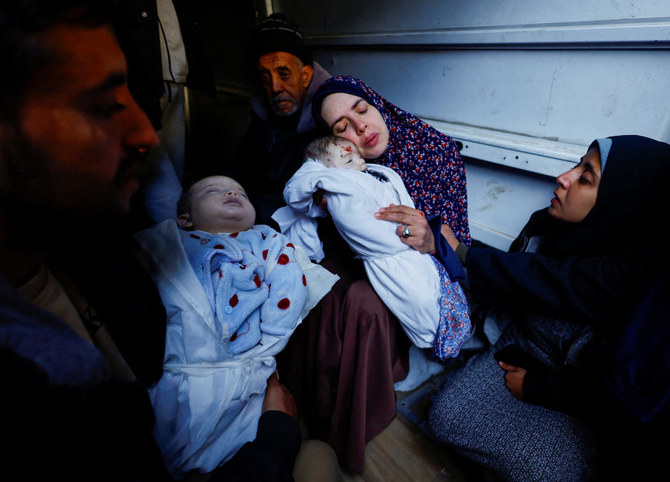
Now go back to that image. The mother holding her shrouded child. The tears and the smile. If you understand the Islamic conception of martyrdom, that image is not pathological. It is not evidence of a "death cult." It is an expression of the deepest kind of faith. The conviction that her child is not gone but present with Allah, alive in a way that transcends biological existence, receiving provision, rejoicing. Her tears are the tears of a mother who has lost the physical presence of her child in this world. Her smile is the smile of a believer who knows, with a certainty that no amount of Western skepticism can touch, that this separation is temporary and that her child is in a place no bomb can reach.
This understanding is not marginal to Islam. It is not the province of "extremists" or "radicals." Imam al-Ghazali, in his Ihya Ulum al-Din, places the discussion of death and the afterlife at the very center of the believer's spiritual life, arguing that the remembrance of death is not morbid but clarifying, that it is precisely the awareness of death and what lies beyond it that gives life its moral seriousness. Ibn al-Qayyim, in his Kitab al-Ruh, undertakes one of the most detailed explorations of the soul's journey after death in the Islamic tradition, describing the state of the shuhada as one of nearness to Allah that the living cannot fully comprehend but that the dying, in their final moments, are sometimes given a glimpse of. This is why, in the hadith literature, the Prophet (peace and blessings be upon him) describes the shaheed as wanting to return to this world not to live again but to be martyred again, so great is the honor they have received.
I want to sit with that for a moment, because it is the precise inversion of what Western audiences have been trained to believe. The tradition does not glorify death. It redefines it. It says that what you call death is actually a door, and that those who pass through it in the cause of truth are not victims to be pitied but witnesses whose testimony has been accepted by the Lord of the Worlds. Of course, the grief is real and Islam does not prohibit grief. The Prophet SAW himself wept at the death of his son Ibrahim. But the grief exists within a cosmological framework that gives it meaning, direction, and ultimately, hope. Without that framework, the grief is just grief, pointless suffering in a pointless universe. With it, the grief is a station on a journey that does not end at the grave.
This is what is at stake when the West distorts martyrdom. It is not just a concept that is being misrepresented. It is an entire cosmology, an entire understanding of what it means to live and to die and to stand before Allah. And the distortion is not accidental.
How the Distortion Was Constructed
The Western distortion of Islamic martyrdom did not emerge organically from cultural difference. It was manufactured, systematically and deliberately, to serve specific political interests. And tracing the construction reveals something that the Islamophobia industry would prefer to keep hidden, that the distortion of shahada and the defense of Zionism are the same project.
The pre-9/11 Western understanding of martyrdom, to the extent that it existed at all in public consciousness, was shaped primarily by the Christian tradition. The word "martyr" in English comes from the Greek martys, which means, notably, the same thing as shaheed, witness. Early Christian martyrs were venerated for centuries as saints who had given their lives in testimony to their faith. Joan of Arc was burned at the stake and later canonized. The tradition of martyrology in Christianity is enormous, rich, and unambiguously positive. No one in the West considered the concept of martyrdom pathological when it was applied to Christians. It was noble and even holy. It was sacrifice.
Something happened to change that, and the something was not September 11th, though September 11th accelerated it. The something was Palestine.
The deliberate association of Islamic martyrdom with irrationality, savagery, and suicidal violence was pioneered not by counter-terrorism experts or cultural analysts but by the Israeli propaganda apparatus and its allied network in the West. And it was pioneered specifically to address a problem that Zionism has faced since its inception, the problem of Palestinian refusal to disappear.
Zionism, from its earliest articulations, depended on the erasure of the Palestinian people, first from the land, then from history, then from moral consideration. The famous Zionist slogan, "a land without a people for a people without a land," was not merely inaccurate. It was a program. It was a statement of intent. The Palestinian people had to be made invisible, and when they could not be made invisible (because they stubbornly continued to exist, to resist, to refuse to leave), they had to be made incomprehensible. Their resistance had to be reframed not as the rational response of a colonized people to colonization but as something irrational, something pathological, something rooted in a culture of death rather than a struggle for life.
This is where the distortion of martyrdom becomes essential. Because Palestinian steadfastness, the refusal to break after seven decades, the willingness to endure unspeakable suffering rather than abandon the struggle for return, is fundamentally inexplicable within a secular materialist framework. If human beings are purely rational actors motivated by self-interest (the assumption that undergirds Western political thought from Hobbes to the present), then a people who continue to resist under conditions this extreme must be either irrational or driven by something the secular mind categorizes as fanaticism. The possibility that they are sustained by a genuine, coherent, theologically grounded understanding of sacrifice, suffering, and the afterlife is a possibility that the Western framework cannot admit, because admitting it would require taking Islam seriously as a source of meaning, and taking Islam seriously is precisely what the apparatus is designed to prevent.
So martyrdom had to be remade. The shaheed, the witness, the one whose death testifies to truth, had to become the "suicide bomber," the fanatic, the death-cultist who loves death more than life. Notice the entire theological and cosmological framework, the Quranic promises, the scholarly tradition, the distinction between this world and the next, the understanding that the shaheed is alive with their Lord, all of it is stripped away. What remains is a caricature of the Muslim who dies because their culture glorifies death. And this caricature, once established, does extraordinary political work. It dehumanizes Palestinians. It makes their resistance incomprehensible on any terms other than pathology. It forecloses solidarity by making Western audiences afraid of the very people they might otherwise support. And it protects Israel, because if Palestinian resistance is rooted in a "death cult" rather than in legitimate grievance and profound faith, then Israel's violence against Palestinians is not colonial aggression but self-defense against the irrational.
I want to name some of the infrastructure that maintains this distortion, because it is not ambient. It is institutional.
Organizations like MEMRI (the Middle East Media Research Institute, founded by a former Israeli military intelligence officer) have spent decades selectively translating and decontextualizing Arabic media to present Muslim and Palestinian discourse in the most alarming possible light. Their business model is distortion. They take a grieving father's declaration that his child is a shaheed, strip it of its theological context, and present it to Western audiences as evidence that Palestinians celebrate death. They take a sheikh's sermon about the rewards of the afterlife, rip it from its tradition, and frame it as incitement to violence. This feeds directly into the media ecosystem that shapes how Western publics understand Palestine.
The Islamophobia network in the United States, meticulously documented by the Center for American Progress and others, operates on the same principle. Think tanks like the Gatestone Institute, the Middle East Forum, the Clarion Project, and individuals like Daniel Pipes, Robert Spencer, and Pamela Geller have built careers on the premise that Islam itself, not any particular political grievance but the religion as such, is a threat to Western civilization. But look at what they actually spend their time on. It is not Sufism in Senegal or Islamic architecture in Samarkand. It is Palestine. It is always Palestine. Their fundraising spikes when Gaza is in the news. Their rhetoric intensifies when Palestinian resistance is visible. Their entire apparatus is organized around ensuring that Western audiences see Palestinians not as a colonized people fighting for their land but as an expression of an inherently violent religion fighting for the destruction of civilization.
And here is the point I want to make as clearly as I can, the Islamophobia industry and the pro-Israel lobby are not merely allies of convenience. They are fused together. They share the same donors, personnel, infrastructure, and even audiences. Organizations like the Anti-Defamation League, which markets itself as a civil rights organization, has spent decades targeting Muslim civil society, opposing mosque construction, surveilling Muslim student organizations, and providing cover for Israeli military operations. AIPAC's political apparatus and the Islamophobia network's media apparatus are two arms of the same body. And the reason they are fused is that they serve the same function of making the Palestinian, and by extension the Muslim, into an object of fear rather than a subject of solidarity.
Remove Palestine from this equation and watch what happens. The Islamophobia industry does not merely lose its most compelling content. It loses its reason for existing. The entire apparatus is built to manage a single political problem, and that is, the growing global recognition that Israel is a settler-colonial state committing genocide against an indigenous people. Every dollar spent demonizing Islam, every media segment devoted to the "clash of civilizations," every campus organization created to police pro-Palestine speech is, at bottom, an investment in the political survival of Zionism. If Palestine were no longer a live issue, if the occupation ended, if the refugees returned, the infrastructure would collapse overnight because there would be no revenue model. Fear of Islam is not self-sustaining. It requires a constantly refreshed supply of images, narratives, and threats that the Palestinian struggle, precisely because it is real and ongoing and impossible to ignore, conveniently provides.
This is why the distortion of martyrdom is so central. Because martyrdom is the concept that most directly connects Palestinian resistance to Islamic faith, and that connection is what the apparatus must sever at all costs. If Western audiences understood that the Palestinian mother's smile is an expression of iman, of a lived relationship with the unseen, of a cosmological certainty about the afterlife that has been part of Muslim consciousness for fourteen centuries, they would have to contend with Islam as a serious system of meaning rather than a pathology to be managed. And if they contended with Islam as a serious system of meaning, they might begin to understand Palestinian steadfastness as something other than fanaticism. And if they understood Palestinian steadfastness, they might begin to oppose the genocide. And that is the one outcome the apparatus exists to prevent.
Why This Matters for the Movement
Let me bring this back to the practical, because I know that some readers will have followed the argument this far and still be wondering, what does any of this have to do with organizing? Everything.
The inability of the Western Palestine solidarity movement to reckon with martyrdom is not a minor gap in messaging. It is a structural failure that limits everything else the movement can do. When you cannot talk about shahada, you cannot explain Palestinian resilience. When you cannot explain Palestinian resilience, you are left attributing it to either irrationality or desperation, both of which reinforce the dehumanization you are supposedly fighting against. When you cannot place Palestinian death within the Islamic framework that Palestinians themselves use to understand it, you are forced to place it within a Western framework of victimhood that strips Palestinians of their agency, their faith, and their dignity. You end up, absurdly, dehumanizing the people you are trying to humanize.
I have watched this happen in real time. I have sat in organizing meetings where well-meaning people carefully avoided any mention of Islam, the afterlife, or spiritual resilience when discussing Gaza, because they were terrified that such language would alienate "mainstream" audiences. And I have watched the resulting messaging be so sanitized, so stripped of everything that makes Palestinian resistance what it actually is, that it could have been written about any conflict anywhere. What remained was a human rights press release that could generate a news cycle but could not reach a single heart.
And this is where I want to return to the fusion of Islamophobia and Zionism, because the organizing failure I am describing is not organic. It is engineered. The reason Palestine solidarity activists are afraid to talk about martyrdom is that the apparatus has made it dangerous to do so. If you use the word shaheed in a public setting, you risk being accused of supporting terrorism. If you reference the Quranic understanding of the afterlife in a political context, you risk being flagged by campus surveillance operations funded by pro-Israel donors. If you explain that Palestinians view their dead as martyrs who are alive with their Lord, you risk being doxxed by Canary Mission and branded an extremist by StopAntisemitism. The apparatus has created a chilling effect so thorough that most organizers, Muslim organizers included, have simply stopped trying to integrate the spiritual dimension of Palestinian resistance into their work. The apparatus does not need to win the argument. It just needs to make the argument too costly to have.
This is by design. And the only way to defeat a strategy of intimidation is to refuse to be intimidated.
Reclamation
So what does reclamation look like?
It starts with refusing the terms. Refusing to translate shaheed into "casualty." Refusing to replace the Islamic framework with a secular one because the secular one is considered more respectable. Refusing to be embarrassed by what the Quran says about death and the afterlife. Refusing the entire premise that Islam must be made palatable to Western sensibilities in order to be valid.
It means, concretely, that when we talk about Gaza, we talk about it in the language that the people of Gaza actually use. When a Palestinian calls their child a shaheed, we do not quietly substitute "victim" because it polls better. We explain what shaheed means. We teach it. We insist on it. It means that Muslim organizers stop apologizing for the Islamic dimensions of our tradition and start articulating them with the scholarly rigor and spiritual conviction that fourteen centuries of Islamic thought have equipped us with.
It means recognizing that the distortion of martyrdom is not a cultural misunderstanding to be cleared up with better PR. It is a front in a war, a war being waged against the spiritual coherence of the Palestinian struggle and against Islam as a living source of meaning and resistance. And fronts in wars are not resolved by explanation. They are resolved by steadfastness.
The people of Gaza have shown us what steadfastness looks like. They have not asked for our permission to grieve as Muslims. They have not translated their faith into secular categories for our comfort. They have not hidden their relationship with Allah to avoid making Western audiences uncomfortable.
When the bombs fall, they say "Hasbunallahu wa ni'mal wakeel," Allah is sufficient for us and He is the best Disposer of affairs. When their children are killed, they call them shuhada. When their homes are destroyed, they pray in the rubble. They have not been broken because they possess something that no military in the world can destroy: a living relationship with the unseen.
Our job, in the West, is not to protect them from their own faith. Our job is to catch up.
The shaheed is not dead. The shaheed is alive, with their Lord, receiving provision, rejoicing. This is what the Quran says. This is what we believe. And this is what we will say, clearly and without apology, until the distortion is dismantled and the truth is restored to its rightful place at the heart of the struggle.
Whoever they kill, they cannot kill what the shaheed witnessed. And that is why they are so afraid of the word.