
Should We Support Zohran Mamdani?
Zohran Mamdani, born in Kampala, Uganda recently became the first Muslim mayor of New York City. His campaign focused around the theme of making New York City affordable, though rent freezes on stabilized units and wealthier New Yorkers paying their fair share to keep the city running. He also gained a lot of popularity as a candidate for not displaying submission to corporations and the settler colony of ‘Israel’ as New York City has been one of the more active cities for Palestinian support since October 2023. During the campaign, Mamdani endured relentless bigotry. Two Republican congressmen went so far as to demand the Justice Department investigate his citizenship, essentially questioning if a Muslim immigrant had the right to hold office.
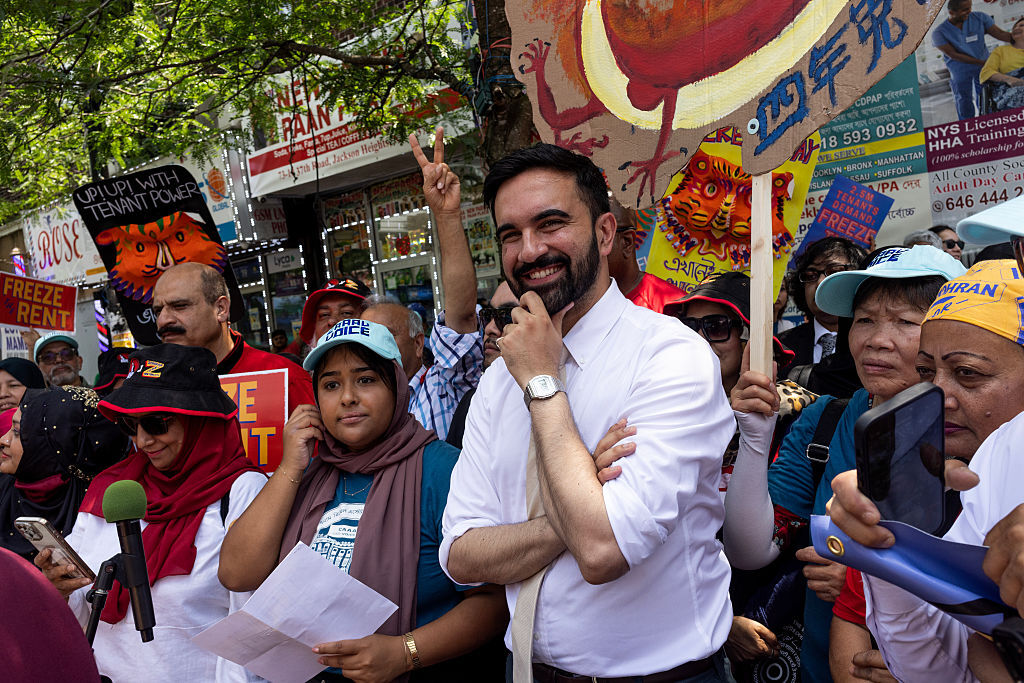
Far-right politicians smeared him as an “enemy within” and even called to denaturalize and deport him without evidence. On a live radio show, former Governor Andrew Cuomo stooped to suggesting that Mamdani would “cheer” a 9/11-style terrorist attack on New York. These attacks reflect a longstanding trend of painting Muslims as disloyal, dangerous, and unfit to lead. An online hate machine piled on, with over 35,000 Islamophobic posts flooding social media, a “systemic and organized campaign of dehumanization,” as a CAIR-NY analysis described it.
This climate is rooted in the post-9/11 “War on Terror” era and heavily fueled by pro-Israel and right-wing networks. As Mamdani himself said, “Islamophobia is something that is endemic to politics across this country… we have seen it normalized.” The truth is that American Muslims are still expected to prove they “belong” in their own country. Zohran’s win signals that this paradigm may be shifting, but it also exposes the scale of what we’re up against. As a Palestinian Muslim led movement, we view this moment through our faith. Islam teaches us both to celebrate good and to hold one another accountable. This is a balance rooted in the Sunnah. The Prophet (SAW) taught that “the best type of jihad is speaking a true word in the presence of a tyrant ruler.”
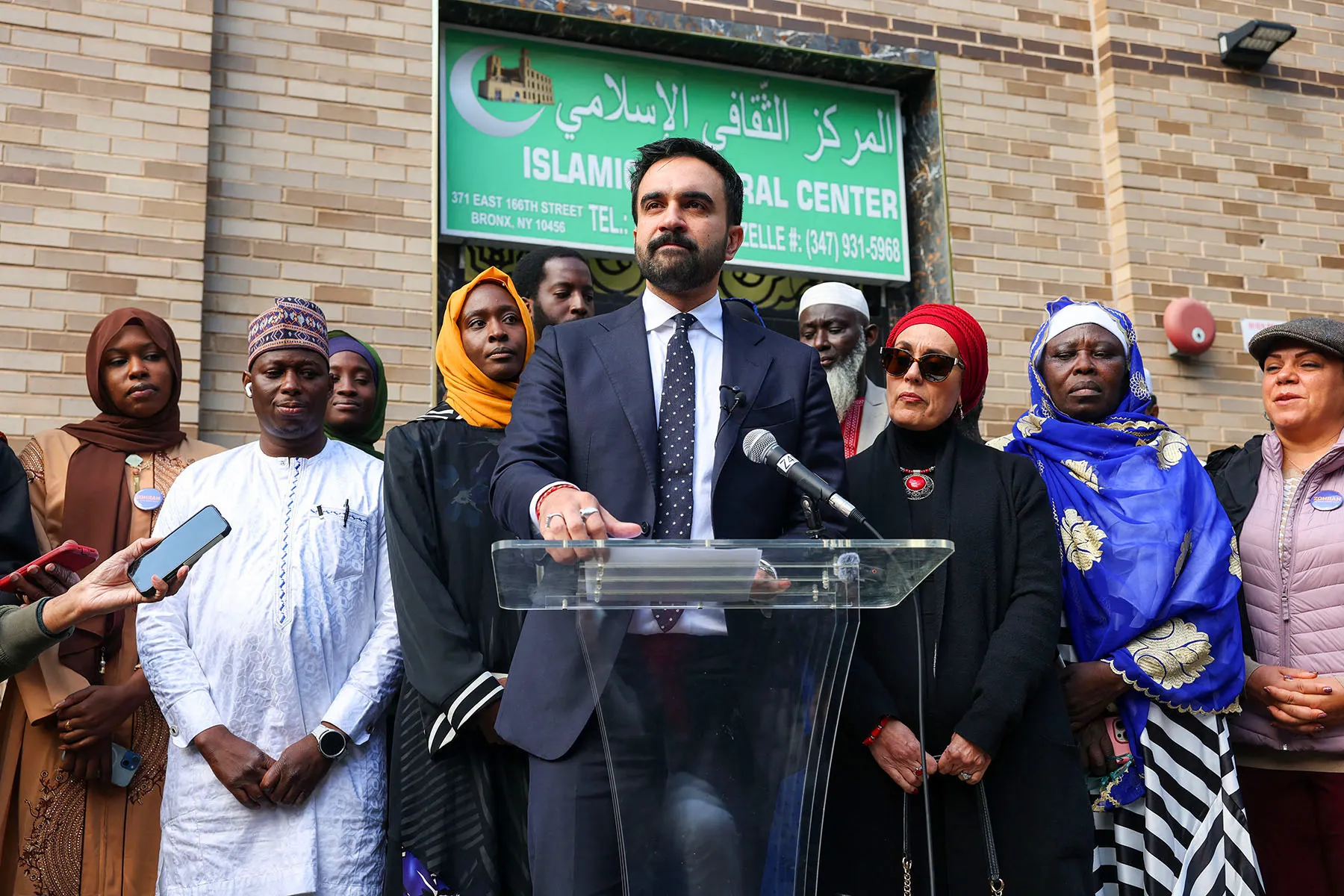
In the spirit of praising what is praiseworthy, we celebrate Mamdani’s achievement over Cuomo and recognize the virtues he may bring to City Hall. He is, by many accounts, a principled community organizer-turned-politician whose focus has been serving the people. He also refused to bow to coercive pro-Israel ultimatums, even rejecting the political ritual of proving loyalty through a trip to ‘Israel’. Mamdani’s win also unseated a corrupt, reactionary local regime. He defeated not only Cuomo, but also the remnants of Eric Adams’ administration, which had been filled with fraud charges and racist rhetoric.
It is through this lens that we evaluate Zohran Mamdani’s positions regarding ‘Israel’. We acknowledge that Mamdani has been more forthright about Palestinian rights than perhaps any mayor in New York City’s history. He openly identifies as anti-Zionist, and has condemned ‘Israel’s’ “war” on Gaza as what it is, a genocide. However, it is precisely because Mamdani comes from our ranks, as a self-professed pro-Palestine activist, that we must be especially vigilant regarding any softening or dilution of principles on his part.
We cannot ignore that as the campaign progressed and pressure mounted, Mamdani made statements that troubled many in the pro-Palestine base who helped elect him. Even if some see this as strategic messaging under pressure, others hear it as the start of a dangerous drift into “acceptable” Zionist language. That gap matters, because it can isolate him from the very pro-Palestine base that helped elect him. For instance, during a televised debate and again on The Late Show with Stephen Colbert, Mamdani was asked if “Israel has a right to exist.” He responded, “Yes, like all nations, I believe it has a right to exist – and a responsibility to uphold international law.” We recognize that Mamdani was walking a tightrope, attempting to avoid the traps set for him by a media eager to paint him as a radical. Still, we must mark this as a cautious yellow flag.
Likewise, Mamdani’s response to the events of October 7 and their aftermath raised some eyebrows among principled Palestine supporters. On Colbert’s show, Mamdani referred to the Hamas attacks of that day as a “horrific war crime” without the context of decades of oppression that led up to October 7th. He also distanced himself from the popular protest chant “Globalize the Intifada” insisting “that is not language that I use.”
Let us be honest that there is nervous talk in our community about whether Mamdani might go soft on Zionism now that he has ascended to power. We have seen this happen before where activists water down their rhetoric, avoid words like apartheid and settler-colonialism, and begin normalizing what they once condemned. Power structures will try to co-opt even well-meaning individuals, and we must not be naïve about that reality.
This is why the Thawābit matters. Our non-negotiable principles on Palestine. No amount of political convenience can make us accept, for example, that arming ‘Israel’ to commit massacres is tolerable, or that Palestinian resistance (which is legitimate under international law) can be dismissed as “terrorism.” We will be watchful that Mamdani does not cross into appeasement or betrayal of these principles. So we will work with Mamdani, support what is good, and defend our people against the Islamophobic attacks that will surely continue from Zionists and racists. However, we will also pressure him to fulfill his promises. And we will expect tangible actions, as we have the ability to hold him accountable.
