
Where’s The 3rd Intifada?
The Arabic word intifada, which literally translates to “shaking off” or “tremor,” refers generally to a rebellion or uprising and has been used to describe uprisings in various national and historical contexts. In the Palestinian context, it refers to uprisings led by Palestinians against the “Israeli” occupation in both Gaza and the West Bank, and specifically to the sustained movements of the First and Second Intifadas. More recently, in the last phase of genocide against the Gaza Strip, the term “Student Intifada” has been used to denote the wave of student activism, namely with the encampments in 2024 that arose on university campuses around the world in response to the genocide.
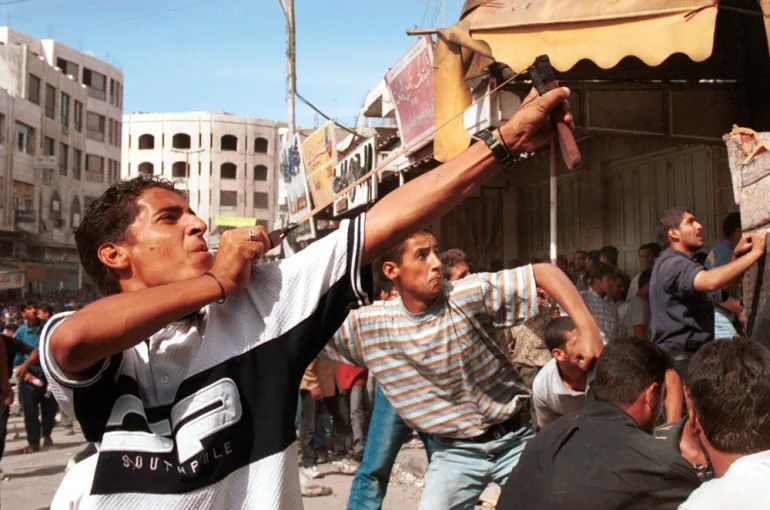
The First Intifada was a grassroots uprising that began in December 1987, as the Zionist entity’s occupation of Gaza and the West Bank was approaching its twentieth year since the 1967 Arab-“Israeli” war. It erupted in the wake of an “Israeli” military vehicle colliding with a station wagon that was carrying Palestinian workers near the Erez Crossing in the Jabalia Refugee camp in the Gaza Strip. The collision killed four and wounded ten other Palestinians. The First Intifada was characterized by mass protests, general strikes, and boycotts. This wave of resistance continued for six years until the signing of the Oslo Accords, which began in September 1993 and introduced the prospect of Palestinian statehood.
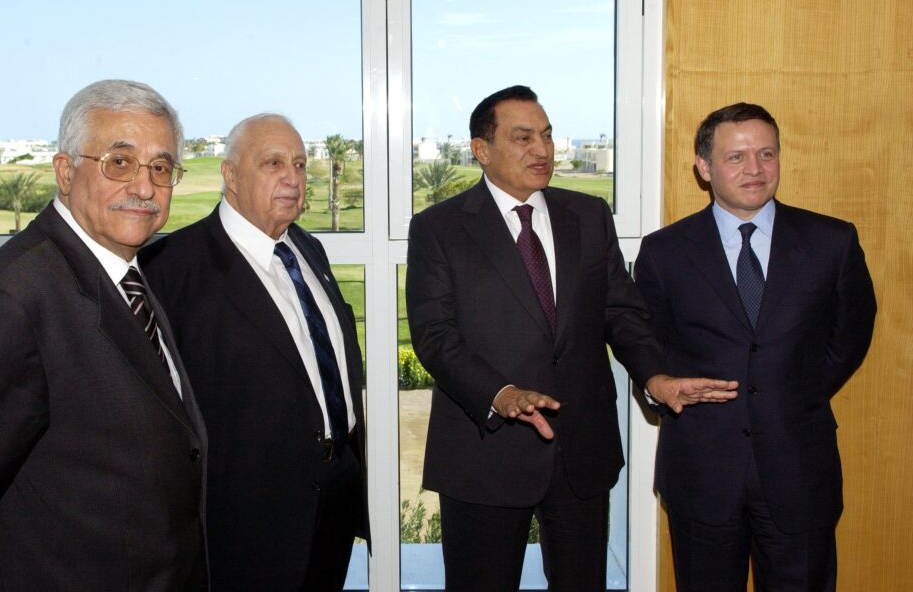
The Second Intifada (otherwise known as the Al-Aqsa Intifada) was another grassroots uprising that erupted in September 2000. It emerged in the wake of the failure of the Oslo Accords and the visit of the Zionist entity’s Prime Minister, Ariel Sharon, to Haram al-Sharif (Temple Mount). Together, these events provoked the long-held frustration of Palestinians over the Zionist entity’s occupation of their land. The Second Intifada lasted four years until the Sharm el-Sheikh Summit in February 2005, when the governments of Egypt, Jordan, “Israel,” and the Palestinian Authority met with the aim of establishing “stability” and ending the Intifada.
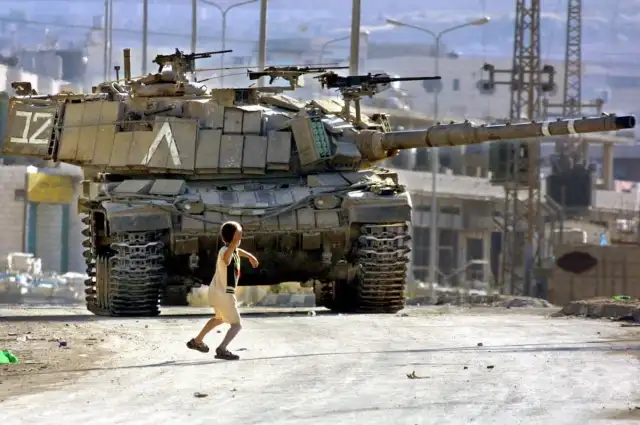
The events of the First and Second Intifadas were characterized by civil disobedience, strikes, protests, and armed resistance. The Zionist entity’s response to both uprisings was one of disproportionate violence and force, including large-scale military operations which resulted in the injury and murder of thousands of Palestinians.
This raises the question of a Third Intifada. While the last phase of escalated genocide against the Gaza Strip has provoked millions around the world to educate themselves, mobilize, and stand in solidarity with Palestinians and the people of Gaza, the same scale and intensity of unified resistance across the Palestinian territories is noticeably absent in the current day context as compared to the First and Second Intifadas. This is largely because the first two Intifadas occurred within a sociopolitical context in which Palestinians still shared a large cohesive national sphere, with fewer physical and institutional barriers dividing Palestinians apart and suppressing their ability to engage in collective action.
In the past thirty years, the Zionist entity has weaponized the strategy of fragmentation against the Palestinian people, inflicting blockade, economic siege, communication and travel restrictions, as well as military assaults against the people of Gaza to ensure their isolation from the West Bank and other geographical neighbors. Meanwhile, the West Bank itself endures its own internal fragmentation as a result of its Oslo-era division into Areas A, B, and C, which have been exacerbated by the expansion of illegal “Israeli” settlements and outposts. These expansions lead to the expulsion of Palestinians from their rightful homes for the purpose of creating residential areas for “Israeli” settlers. They also result in the cutting of roads, the establishment of checkpoints, and enable the settlers to inflict terror against Palestinian families and communities. Such terror includes the burning down of schools, farms, as well as physical assaults on Palestinians. The Palestinian Authority (PA), which governs the West Bank, also plays a significant role in collaborating with the Zionist entity to suppress organizing, activism, and other resistance networks before these networks can expand and pose a threat to the Zionist entity.
This internal fragmentation of Palestinian society also mirrors the greater level of fragmentation across the Arab world and regional dynamics as a whole. The division of Arab and Muslim territories as a result of the Sykes-Picot order, as well as the establishment of normalization agreements between “Israel” and Arab countries, have ensured that these governments only exist to preserve and serve Zionist and Western imperial interests. This fragmentation also suppresses the Arab world’s significantly pro-Palestine populations from tapping into their mass power and mobilizing for the people and cause of Palestine.
While this fragmentation has complicated the prospect of a Third Intifada, it has not squashed all hope entirely. Despite the division and harsh suppression that the Palestinian people face at the hands of the Zionist entity, ordinary civilians continue to resist and defy the Zionist occupation on a daily basis, both in Gaza and the West Bank. Armed groups in Gaza have continuously and steadfastly resisted, and other armed groups have started to form in West Bank cities, including Jenin, Nablus, and Tulkarem. These groups are engaging in sustained resistance against the Zionist occupation and the PA. From a global perspective, the rise of digital networks and the increase in diaspora organizing have also created new spaces and resources to sustain the Palestinian resistance.
Among the greatest obstacles to the rise of a Third Intifada, aside from the suppression and fragmentation, is our own mindsets, particularly around what we think of as “resistance.” A resistance movement is not merely a spontaneous and singular event that topples the oppressor overnight, it is a series of small, consistent, and steadfast actions that eventually intensify and expand into a bigger movement with the will of Allah (sw). According to a hadith narrated by Abu Huraira (ra), “the best of deeds are those done regularly even if they are few.” (Source: Musnad Aḥmad 8600)
The responsibility of these actions and overcoming the fragmentation do not lie on the shoulders of the Palestinians alone. Rather, as members of the diaspora, as inhabitants of the imperial core, and as members of surrounding Arab and Muslim populations, our greater access to resources, organizing spaces, proximity to the imperial powers, and greater freedom of movement places the weight on us to utilize these privileges and opportunities for the Palestinians and all other oppressed peoples around the world. While we have largely won an ideological battle throughout the past two years, we still have strides to make in regard to our material accomplishments toward a liberated Palestine and a liberated world as a whole.
